
I’ve been going back to basics again recently, indulging in a bit of slow cooking. I have my own sourdough starter bubbling away happily and the gathering season has begun…
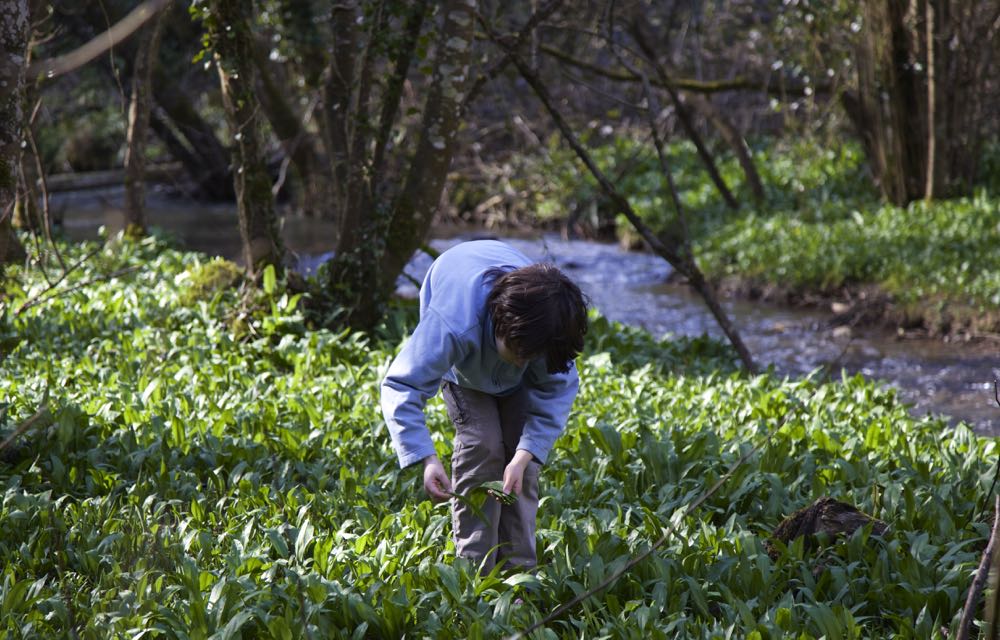
I’ve always got a willing helper if I’m out on a gathering mission, this is our favourite spot to collect wild garlic and nettles and to have a meander by the river.

You can see my recipe for wild garlic scones and read a gatherer’s tale here but for today’s slow food I want to show you how to make tofu!
Making your own tofu is a total revelation, it knocks spots off shop bought tofu, costs just a few pence to make, uses two ingredients and gives you three ingredients for the price of one! I’ve been making my own for a few years now, my recipe was adapted from one in Vikki Leng’s ‘A Vegetarian Fest’ published in 1994 and has absorbed bits of advice from various cooks and books over the years. This is a recipe for basic tofu but once you’ve mastered it the world is your oyster!
Each process gives you something to cook with, nothing needs to be thrown away – I love that! When you blitz the beans, boil them and drain the liquid off to make tofu you are left with okara (bean pulp) which you can use to make veggie burgers, felafel and rissoles.

The whey which is left behind when you remove the curds to make your tofu makes a very good base for homemade stock, three ingredients for the price of one!
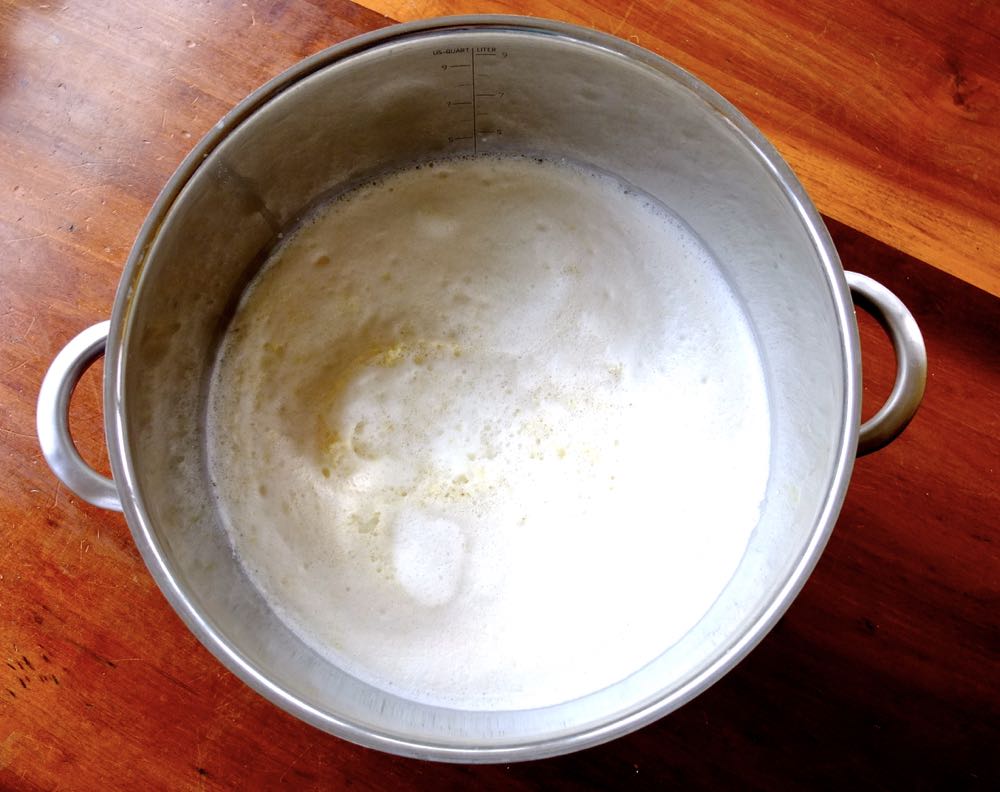
It all begins with beautiful beans – I buy soya beans in bulk from my local wholefood shop but start with a small bag to see how you go, I caught the bug the first time I made it and haven’t stopped since! My ‘How to Make Tofu’ recipe calls for you to use nigari (magnesium chloride) which is available online and in good whole food stores but you can also use lemon juice or epsom salts as an alternative to curdle your milk.

How to Make Tofu
Ingredients
- 350 g dried soya beans, washed
- 3 litres cold water
- 2 teaspoons nigari dissolved in 3 tablespoons of water (you can use lemon juice or epsom salts as an alternative)
Instructions
- Soak the beans overnight in 2 litres of the water
- Do NOT drain the soaking liquid off the beans, add the extra litre of water the following day
- Blitz the beans and the water in batches in a blender (this gets very splashy so don’t over fill your jug or bowl) you can use a food processor if you don't have a high speed blender, use the blade attachment)
- Pour the frothy beany liquid into a very large pan (I use my preserving pan)
- Bring the liquid to the boil, stirring occasionally so it doesn’t stick to the bottom
- Reduce the heat and simmer for 15 minutes
- Pour the mixture though a colander lined with a large piece of muslin
- Allow the bean pulp (okara) to cool and then squeeze as much of the liquid out as you can.
- Pour the resulting milk into a clean pan and heat it until just below boiling point. Remove from heat.
- Stir the mixture briskly until you have a mini whirlpool and pour the nigari in
- Cover and leave for 5 minutes or so while the curds form
- Line a large sieve with fresh muslin and place it over a bowl and gently pour the curds into the muslin
- Fold the muslin over the curds (still in the sieve) and place a heavy weight on top (I use a plate with a couple of tins on top)
- Leave for an hour or so to press out as much whey as possible
Notes
Nutrition
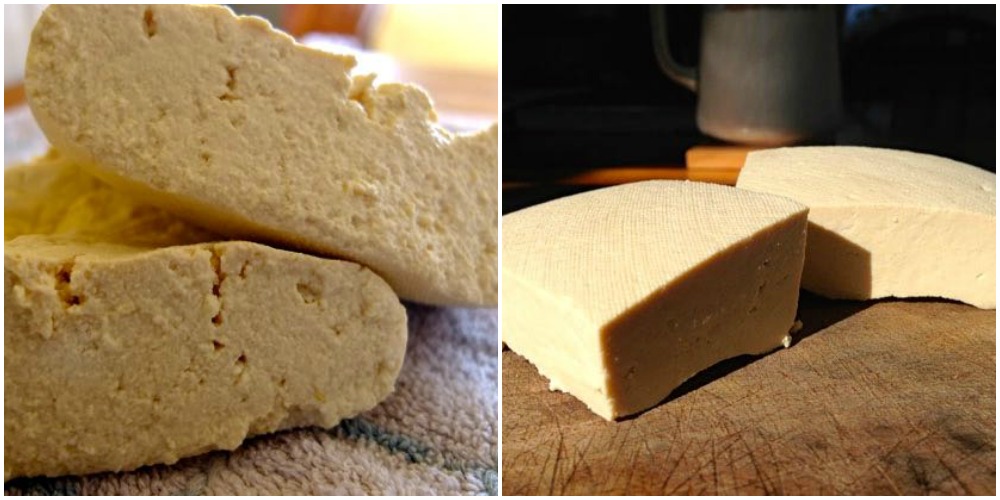
I am always astonished at the difference a good pressing makes to a batch of tofu. On the left you see it after an hour and, on the right, after I’d wandered off and done something else for the afternoon!
I marinated this batch for a couple of hours in 2 tbsp agave nectar, 2 tbsp tamari, 2 tbsp chilli oil, 2 cloves crushed garlic, half a red chilli diced and 1 tsp English mustard powder.
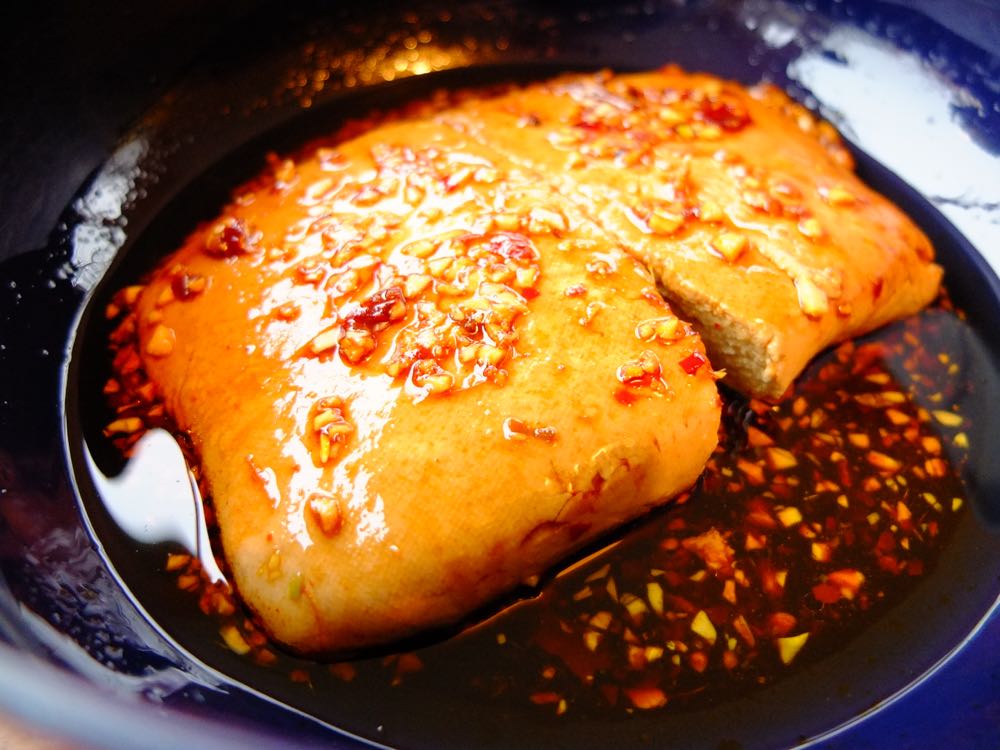
I chopped it into cubes and oven roasted it at 200C for 20 minutes turning it once. The outside was crispy and the inside was soft and delicious – I love how freshly made tofu puffs up in the oven! It went down very well with the whole family served with rice and oven roasted vegetables on a bed of some of our wild garlic wilted in a little olive oil and garlic. I served the marinade in a small jug to be poured over as a sauce.
You can make quick tofu by using ready made soya milk and adding the nigari as above and I’ve done this too. The resulting tofu is much softer and more similar to silken tofu which is really useful in desserts. Oh the tofu possibilities!
Why not pin this post for later? If you’re like me once you start thinking about making your own tofu that thought won’t let you be!
How to Make Tofu!


I have a tofu making kit (it includes the beans, nigari and cheesecloth) but haven’t made my own yet. Yours looks delicious and I really must get round to making some!
It’s never even occurred to me to make my own tofu. It’s just one of those mysterious substances! But you’ve made it look so doable. I’m going to give it a try and report back!
Wow, that is very impressive Chris. It’s sort of like making cheese. I have a friend who keeps telling me I need to make it – she’s been doing it for years. But I’ve not actually bothered to find out what the process is before. CT used to make tempeh which is heaps better than shop bought, but I’ve never had homemade tofu.
Just followed this recipe. For all the drama involved, it only made about 125 grams. Is that normal?
Hi Angela – with this number of beans, yes! You can increase the quantities to make more if you want to make a larger batch. You can use the bean pulp in burgers and the whey in veg stock too. I usually only make as much as I’m going to use straight away as it is so delicious fresh but just multiply up the ingredients if you want more. Chris x
I tried this today…didn’t get any curds whatsoever. Any thoughts on what likely went wrong? Used lemon juice instead of nigari…
I always use nigari – it makes for a much more reliable result. If you want to use lemon juice again I would suggest using a little more but that may affect the flavour, good luck!