These easy vegan pancakes are thin, golden and perfect for rolling, folding, or stacking with your favourite toppings. No eggs, no dairy, just simple ingredients and made with a little love, from scratch. While they’re a classic treat for Pancake Day, these delicate thin vegan pancakes are just as delicious at any time of year.
What Are Traditional English Pancakes?
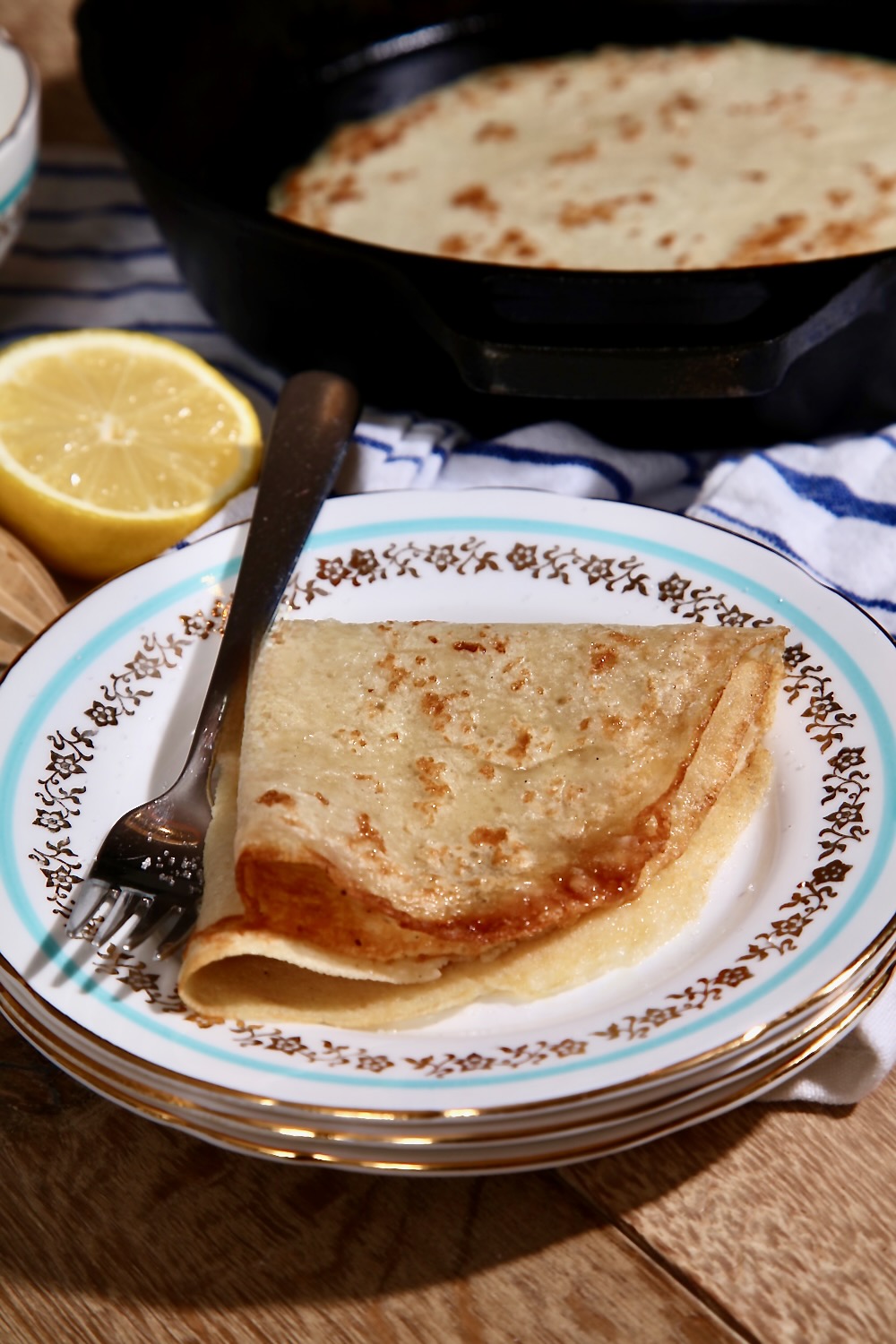
Unlike the fluffy, stackable American pancakes, traditional English pancakes are thin and tender like crêpes. Typically made with flour, milk, and eggs, these pancakes can easily be made vegan and dairy-free without losing any of their classic charm. My children certainly wolf them down in vast quantities, just as I did when my mum made them for me all those long years ago!
Not just for Pancake Day, these thin English pancakes are a versatile treat for any occasion.
When I first tried making vegan pancakes back in 2016, when my eldest began his vegan journey, I thought it would be complicated or unsatisfactory. How wrong I was! Simply removing eggs from the equation and switching to a non-dairy milk made no discernible difference whatsoever!
Ingredients for Vegan Pancakes
A printable recipe card with full quantities and method can be found at the bottom of this post.
- Plain Flour: traditional sweet pancakes are best made with 100% plain flour, but you can swap some out for a little wholemeal flour for a slightly nuttier, more savoury pancake.
- Dairy-Free Milk: I use soya milk but oat milk and almond milk are good alternatives.
- Flavourless Oil: I use rapeseed oil but any neutral oil works, as does melted vegan butter.
Optional:
- Vanilla extract and a little sugar for sweet pancakes.
- A pinch of salt for savoury options.
Top Tips for Making Vegan Pancakes
These tips apply whether you’re making dairy free crêpes or not!
- Rest the batter:Leave your mixture to rest for about 30 minutes before frying. This allows the gluten to relax after it’s been bothered by your whisk and makes for a softer, fluffier texture.
- Check your pan: Pancakes like to stick, use a non stick pan or a well seasoned cast iron pan to prevent this happening.
- Heat the pan properly: Make sure your pan is hot before you start. The first pancake is always a learning curve, but once you find the right temperature, you can churn out lovely thin pancakes to your heart’s content.
- Consistency: The batter should be the consistency of thick cream but be thin enough to swirl easily around the pan. If it’s too thick, add a splash of dairy-free milk.
- Let it set: Patience is a virtue. Don’t try to flip your pancakes too soon. Wait until the top has just set and small holes are appearing before carefully running a spatula around the edge and underneath to see if is ready for flipping.
Delicious Vegan Pancake Toppings and Fillings
Sweet Pancakes
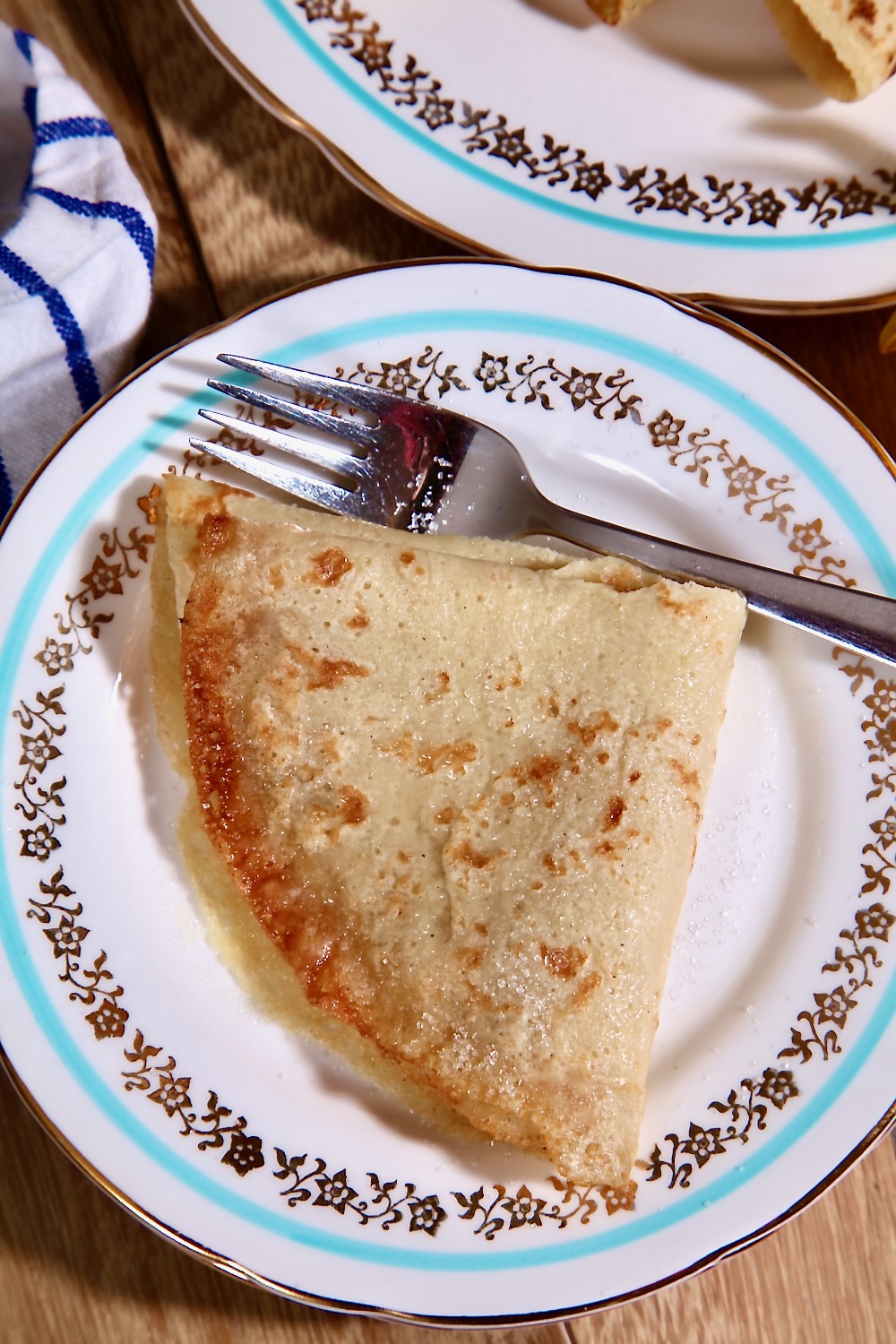
- Sugar and Lemon: The classic Pancake Day topping. On the day itself I won’t be swayed!
- Chocolate hazelnut spread.
- Fruit compote (rhubarb with a little dairy-free yoghurt is my personal favourite)
- Dairy-free cream, ice cream or yoghurt.
- Bananas and cream – some people like banana pancakes, I am not one of those people but I won’t judge!
- Apple sauce and cinnamon.
Savoury Pancakes
- Spinach and creamy mushrooms – my personal favourite!
- Broccoli or cauliflower cheese
- Scrambled tofu (an excellent vegan Sunday breakfast)
- Asparagus with creamy cashew cheese
Make Ahead and Storage
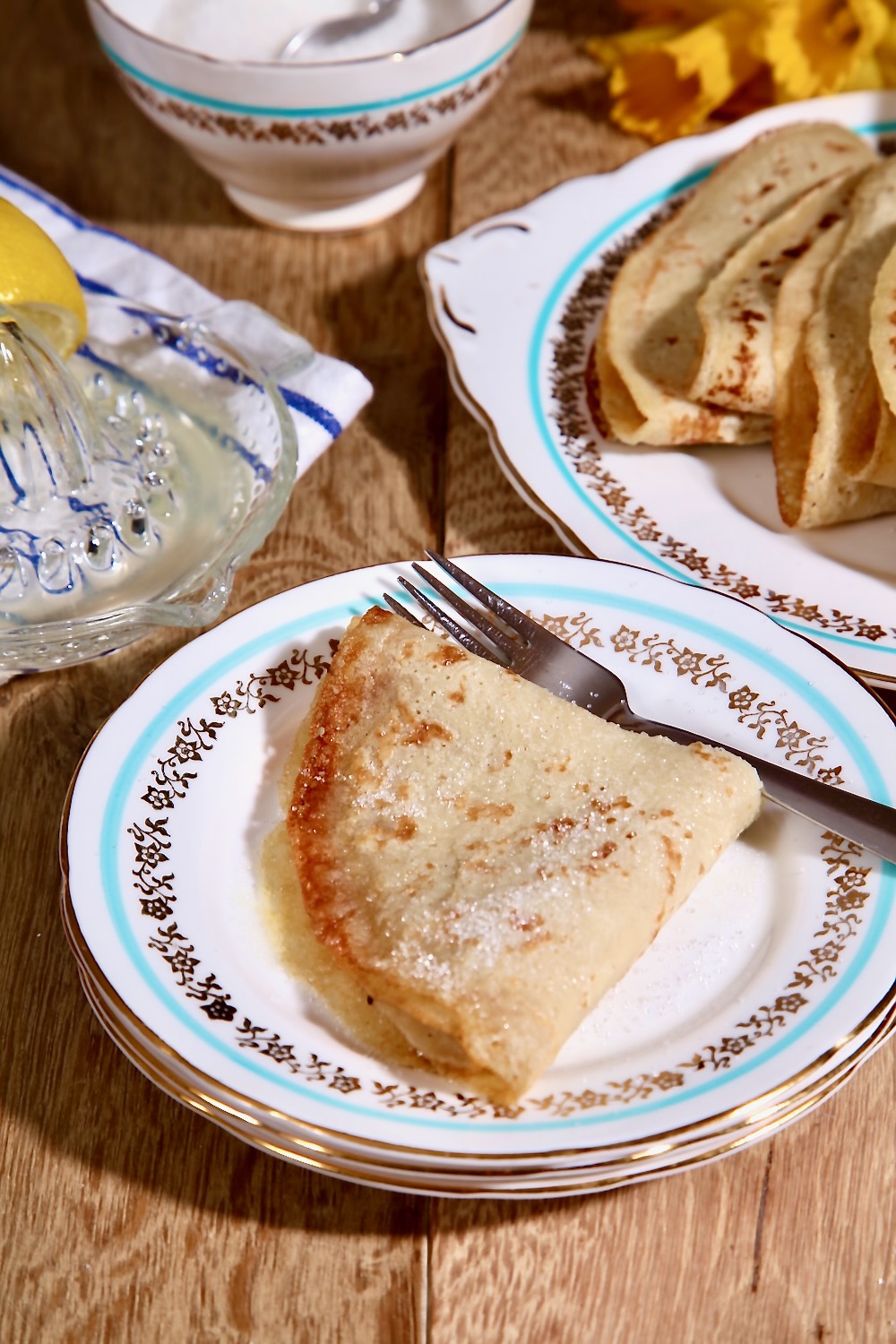
Pancakes are best straight from the pan, preferably tossed with aplomb to appreciative applause, but they also store very well.
Fridge: Stack them on a plate with a square of baking parchment between each to prevent sticking. They’ll keep for later that day or the following one.
Freezer: Stack with baking parchment between each pancake, pop them into a container, and freeze. Defrost gently in a dry frying pan or microwave for a couple of minutes, then serve piping hot.
Seasonal Thoughts
While pancakes make their presence felt as winter draws to a close and Pancake Day nears, they’re also perfect all year round. Enjoy them for breakfast, brunch, or a sweet treat whenever the mood strikes. Simple, adaptable, and utterly delicious, they show that you don’t need eggs or dairy to enjoy a classic pancake or dairy-free crêpe at any time of year.
If You Like This
You might also like these Spring recipes:
- Vegan Easter Biscuits
- Vegan Hot Cross Buns
- Lemon Cupcake
- No Bake Lemon Tart
- Chocolate Rice Krispie Cakes
Traditional Vegan Pancakes - Vegan Crêpes
Ingredients
- 200 g plain all purpose flour
- 500 ml plant-based milk + more to thin if necessary
- 1 tbsp neutral oil + more for frying
Instructions
- Whisk together all the ingredients to make a creamy batter (add the liquid slowly to avoid lumps)
- Optional - Leave to rest for 30 minutes (see notes)
- Add extra milk to thin if necessary
- Heat a little oil in a frying pan over a medium heat.
- Pour in enough batter to thinly coat the bottom of the pan. Swirl it around as you add it to spread it as thinly as you can.
- Cook until the top begins to set and small holes appear.
- Flip and cook the other side.
- Serve immediately with your choice of toppings.
Notes
- Nutrition information is calculated using 1 tbsp oil in the batter and does not include additional oil used for frying.
- Rest the batter: For the best texture, let the batter rest for 20–30 minutes before cooking. This relaxes the gluten and helps create tender, flexible pancakes.
- Pan temperature: Make sure your pan is properly hot before adding batter. The first pancake is often a tester — adjust the heat as needed.
- Consistency check: The batter should be thin enough to swirl easily around the pan. If it’s too thick, add a splash of dairy-free milk.
- Storage: Store cooked pancakes in the fridge for up to 2 days with baking parchment between each. Freeze for up to 3 months.
- Serving ideas: Perfect with lemon and sugar, fruit compote, dairy-free yoghurt, chocolate spread, or savoury fillings like mushrooms or scrambled tofu.