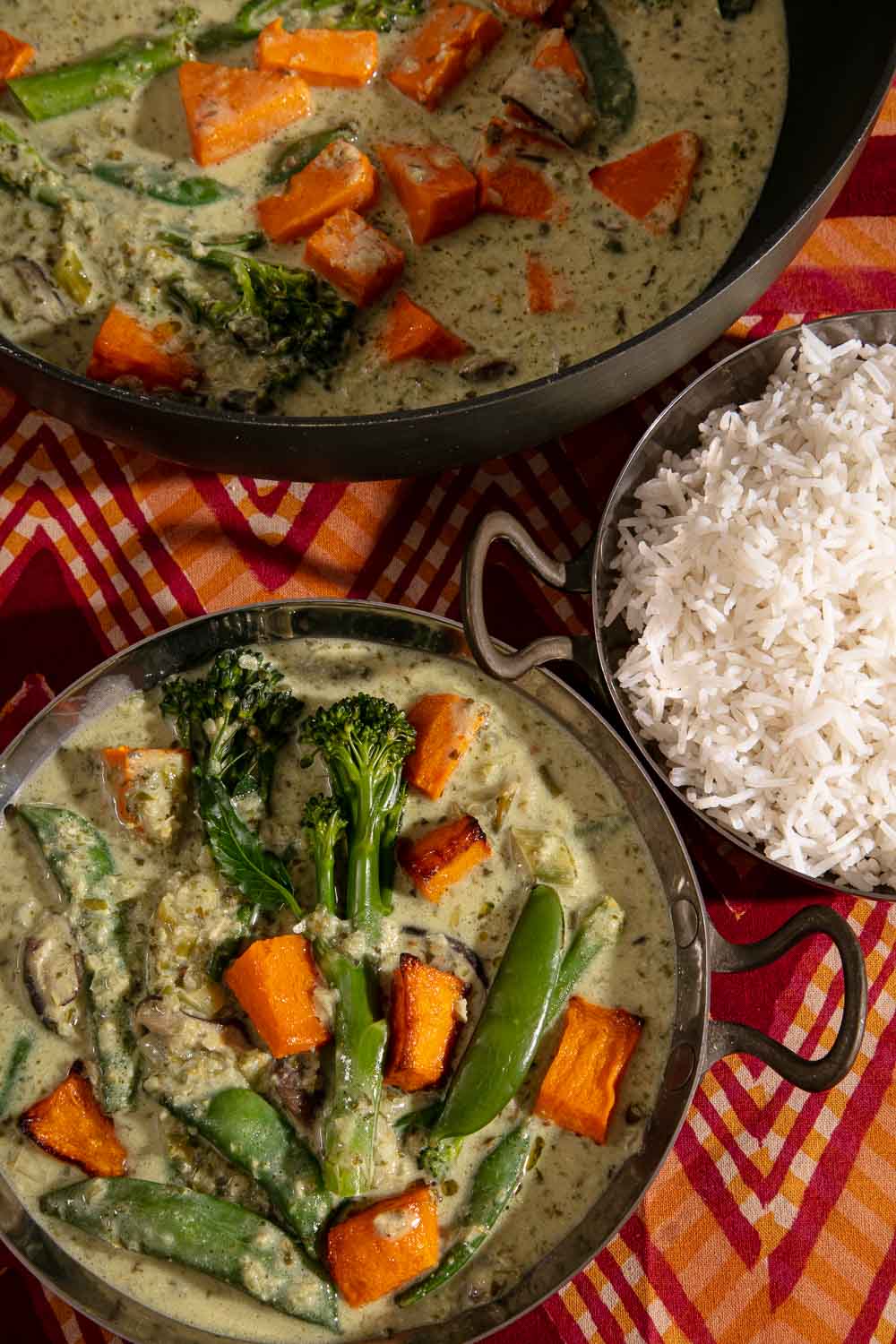
This better-than-takeaway Thai green curry is fiery, coconut-rich and made with shiitake mushrooms for depth and texture. Fresh green herbs keep it bright and fragrant rather than heavy.
What Is Thai Green Curry?
An authentic Thai green curry (Gaeng Kiew Wan) is typically sweet, savoury and seriously spicy, served with jasmine rice and plenty of coconut-rich sauce in most UK Thai restaurants.
My vegan version uses shiitake mushrooms for that chew and dials down the heat a bit while keeping all the flavour and aromatics of a good green curry.
How To Make Vegan Thai Green Curry Paste
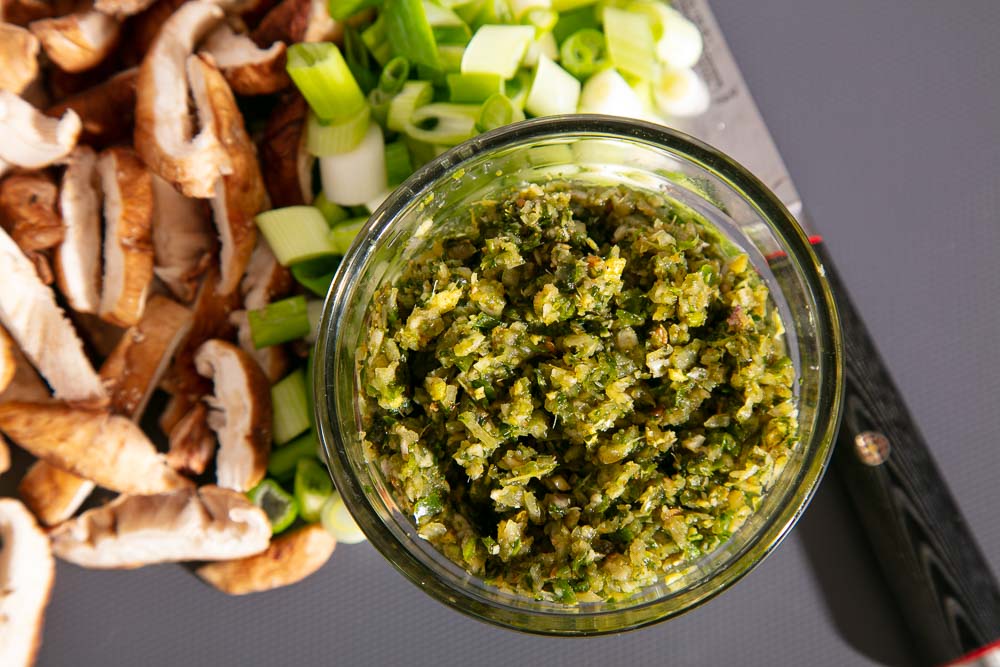
Homemade green curry paste tastes brighter, greener, and far less muddy than most jarred versions. The fresh chillies, lime and herbs keep their sharpness, and you can control the heat properly instead of ending up with a one-note burn. If you want to use a store bought paste check that it doesn’t contain fish!
- Authentic Thai Green Curry paste usually contains galangal which is closely related to ginger and turmeric and looks very similar. It tastes similar to ginger but is a little spicier and is not as readily available. I’ve used fresh root ginger in its place here but feel free to use galangal if you can find it!
- Fish Sauce – obviously I don’t use this one! I’ve substituted nori flakes for that taste of the sea. Clearspring make a nori seaweed sprinkle which is really useful but, if you can’t find them, a sheet of nori broken up in the food processor does the job! You could also use a teaspoonful of white miso instead.
- Garlic – There are 4 large cloves crushed into that little pot. If you are a garlic lover feel free to add some more or, if you’re not so keen, take a couple out.
- Shallots – this sauce calls for the delicate, sweet flavour of fresh shallots rather than the heft of an onion. If you can’t get them replace them with half a red onion.
- Green Chillies – If you want more heat keep the seeds in and, if you are a fan of blistering heat, feel free to add one of the smaller Thai green chillies for a real punch. My husband doesn’t like crying in pain into his dinner so I dial the heat back for him!
- Lemongrass – I used fresh lemongrass here. Peel the outer layer off, trim the ends and chop the softer core. If you can’t get fresh use paste instead but it usually contains sugar and salt so you may need to adjust your flavourings a bit.
- Coriander – This curry paste uses ground coriander seeds and a big handful of fresh coriander leaves and stalks.
- Cumin – Freshly ground. Oh how I love cumin, it is the workhorse spice in my kitchen. It pops up in curries, soups and chillies with its gentle, distinctive flavour!
- Lime Juice – Along with the ginger/galangal and lemongrass a little bit of fresh lime juice adds zesty zing to this delicious curry!
- Salt – Just a little bit. The beauty of making your own paste is that you are in control of the salt content. Salt is added to the final dish so there is no need to go overboard here.
What Goes In A Vegan Green Curry?
A good vegan green curry is really about balance: something creamy, something green, and something with enough body to carry the sauce. Mushrooms do that job well here because they soak up the sauce and add real depth.

I tend to stick with sugar snap peas and Tenderstem broccoli for my greenery because they stay bright and slightly crisp even after a few minutes in the sauce.

How To Make Vegan Thai Green Curry
This green curry starts with the paste. I like mine to keep a little texture rather than blending it completely smooth, so I pulse the ingredients in the food processor instead of running it continuously. If you prefer a silkier curry paste, keep blending. If you don’t have a processor, you can finely chop everything with a sharp knife or grind it in a pestle and mortar.

It’s important to roast the squash until it is beginning to brown as those slightly caramelised edges add a lovely depth of flavour to the finished dish.
I steam the green vegetables until tender and then run them under cold water to stop them cooking before adding them to the sauce.
You can cook the veg in the sauce instead but they will lose some of their green vibrancy.

What To Serve With A Green Curry
I nearly always serve this with jasmine rice because it softens the heat without muting the aromatics. I also like its slight stickiness which absorbs the sauce beautifully. If I have Thai basil or coriander to hand, I scatter plenty over the top just before serving.
Pour the curry over the rice or serve it on the side.
This curry is very saucy and is best served in bowls or on plates with deep lips to stop any spillage! I almost always make extra rice for this because the sauce is the best part and I like enough rice to really soak it up.
Storing and Freezing
Vegan Thai Green Curry will store well, covered, in the fridge for up to three days. Reheat until piping hot before eating.
If you want to freeze your curry leave it to cool completely.
Transfer it to a zip lock bag or suitable container and freeze for up to three months.
Defrost thoroughly before cooking and heat through until piping hot.

You Might Also Like
If you’re feeling spicy you might also like my:

Vegan Thai Green Curry
Ingredients
For The Thai Green Curry Paste
- 4 cloves garlic peeled and roughly chopped.
- 2 shallots peeled and roughly chopped.
- 2 sticks fresh lemongrass trimmed, tough outer layer peeled off, inner core roughly chopped.
- 1/2 bunch fresh coriander you need a great big handful!
- 2-4 green chillies roughly chopped, seeds removed for less heat if required.
- 3 cm piece of fresh ginger peeled and roughly chopped.
- 1 tsp ground cumin seed
- 1 tsp ground coriander seed
- 1 tsp salt
- 1 tsp nori flakes or 1 sheet nori, crumbled.
- 1 tsp lime juice
For The Veg
- 300 g butternut squash peeled and cubed
- 1 tbsp vegetable oil
- 100 g sugar snap peas
- 100 g tenderstem broccoli
- 1 bunch spring onions
- 100 g shiitake mushrooms sliced, stalks removed
For The Sauce
- 1/2 tbsp vegetable oil
- 400 ml can full fat coconut milk
- 200 ml vegetable stock
- 2 fresh kaffir lime leaves
- 1/2 lime - juiced
Instructions
Cook The Vegetables
- Preheat oven to 200C/390F
- Toss the prepared squash in 1 tbsp oil and roast for 30 - 40 minutes until browning and fork soft.
- Steam the green vegetables until just cooked. Cool under cold running water.
To Make The Vegan Thai Green Curry Paste
- Peel and roughly chop the garlic, ginger, shallots and lemongrass.
- Roughly chop the chillis (remove seeds first for a milder curry) and the fresh coriander.
- Add to a food processor with the rest of the ingredients and pulse to a paste.
Make The Sauce
- Fry the sliced shiitake mushrooms and spring onions in 1/2 tbsp vegetable oil for 2-3 minutes.
- Add the curry paste and fry for a further 5 minutes, stirring to prevent sticking.
- Add the coconut milk and stock along with the lime leaves and lime juice.
- Bring to a simmer and bubble away for 10 minutes until reduced slightly.
To Finish
- Stir the steamed vegetables and roast squash, simmer for 3 minutes until everything is piping hot.
- Serve with cooked rice.